%2Ffit-in%2F250x250%2Fguide_websites%2F6008%2Fimages%2Fsea_senorita_logo.png&w=1920&q=100)
Black Grouper, King Mackerel & Tuna Caught in Tavernier
Offshore Fishing in Tavernier - What to Expect
%2F%2Fusers%2F2b68f53a-61ec-4012-bb4c-40de422fde20%2Fimages%2Ftavernier-grouper-mackerel-tuna-fishing-2788.jpg&w=1920&q=75)
Fishing Charter by Captain Casey Yaworski in August
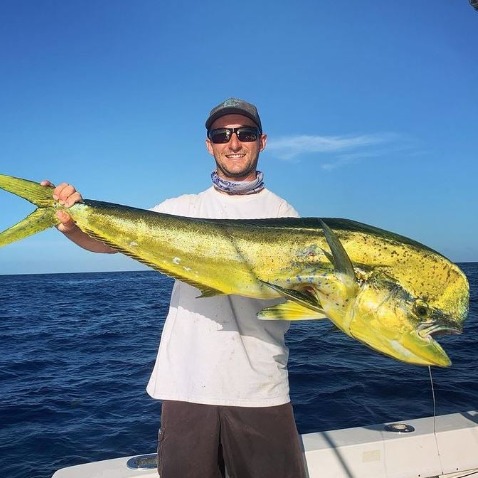
Meet your Captain Casey Yaworski
- Top-rated Fishing Charters in Tavernier


Summary
Experience an exhilarating fishing charter in Tavernier, Florida with Captain Casey Yaworski of Sea Señorita Charters. This Friday in August delivered explosive action targeting black grouper, king mackerel, and blackfin tuna on open water. Fast-paced offshore fishing with expert local guidance and proven results.
Fishing Charter with Captain Casey Yaworski - Rates & Booking
Captain Casey Yaworski of Sea Señorita Charters led this high-octane fishing charter out of Tavernier on Friday, August 1st, delivering a mixed-species slam that had anglers fired up. This charter showcases exactly what experienced local guidance can achieve when targeting Tavernier's most sought-after offshore species.
Ready to book your own explosive day on the water? Sea Señorita Charters specializes in customized fishing trips tailored to your target species and skill level. Contact Captain Casey directly for rates, availability, and charter details. Full fishing gear and expertise are part of the experience - you bring the energy, he brings the knowledge and results.
Highlights of This Tavernier Fishing Charter
The action was relentless. Two massive black grouper hit hard, their stubborn bottom-hugging fight testing rigs and resolve. The strike came fast when king mackerel slashed through the chum lines with signature aggression. Then came the Blackfin tuna - two sleek speedsters that transformed the fight from power play to pure adrenaline-pumping speed.
What made this charter exceptional wasn't just the volume of quality fish - it was the diversity. Each species requires different tactics, presentations, and reading of offshore conditions. Captain Casey's ability to locate and adapt to multiple target fish in one outing demonstrates years of local expertise and intimate knowledge of Tavernier's offshore structure and seasonal patterns.
Local Species Insights: Black Grouper, King Mackerel & Blackfin Tuna
Tavernier's offshore waters are a collision zone where multiple trophy species converge on deep structure, drop-offs, and open water feeding zones. Black grouper are bottom dwellers that key on rocky ledges and wrecks, using their powerful bodies to fight hard near cover. They're aggressive but stubborn - the battle is all about authority and control.
King mackerel are the speed demons of this ecosystem. Streamlined hunters built for explosive strikes and intense head-shaking runs, they patrol deeper ledges and chum lines with predatory precision. Their strikes are unmistakable - a hard hit followed by blistering runs that demand heavy tackle and sharp reflexes.
Blackfin tuna represent the fastest action on the roster. These compact speedsters are built entirely for velocity and endless stamina. Smaller than their larger cousins, Blackfin pack all their power into sustained sprints and aggressive surface strikes. When they're feeding, the water explodes with activity.
The offshore environment here combines the Atlantic's deep blue with structure-rich terrain. Summer conditions bring warm water and active feeding periods. Tavernier sits in the Keys chain with prime access to reef systems, deep channels, and the Gulf Stream influence - a triple threat for consistent multi-species fishing.
Plan Your Tavernier Fishing Day
A full fishing charter experience with Sea Señorita Charters puts you on proven offshore hunting grounds with a captain who knows exactly where to find action. Expect to encounter multiple species throughout the day. Experience includes everything you need - tackle, rigging expertise, knowledge of seasonal patterns, and real-time navigation to active feeding zones.
Whether you're a hardcore offshore enthusiast or looking to level up your fishing game, this charter type delivers variety, intensity, and legitimate opportunities at trophy-class fish. The pace stays fast, the action stays real, and the results speak for themselves.
Fishing in Tavernier: King Mackerel, Blackfin Tuna and Black Grouper
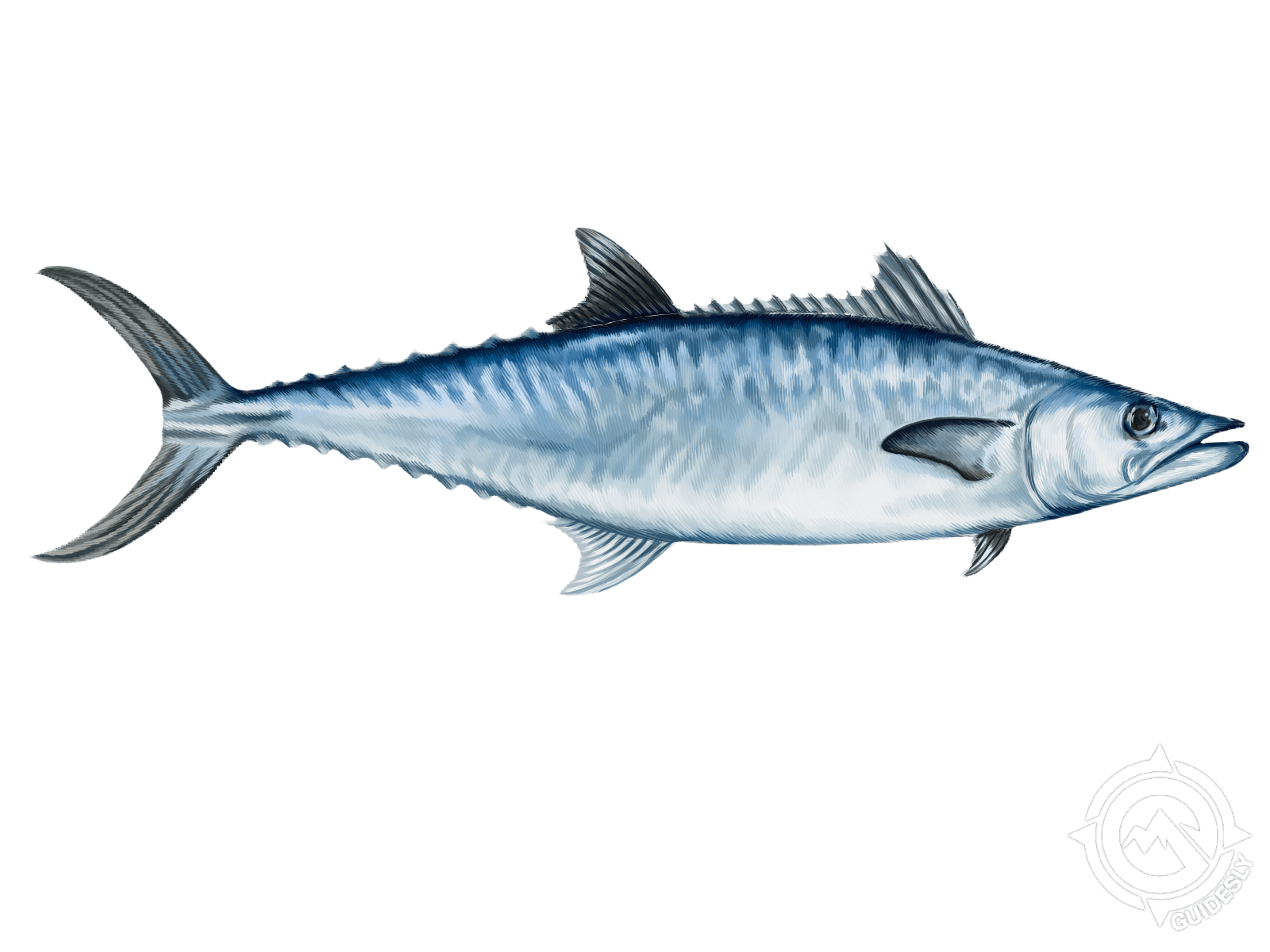
King Mackerel Overview
The King Mackerel (Scomberomorus cavalla) is a prized saltwater gamefish belonging to the family Scombridae and order Perciformes. Also known as Kingfish or Spanish Mackerel, this migratory powerhouse is famous among anglers for its lightning-fast runs and aggressive strikes. What makes the King Mackerel instantly recognizable are its small, loosely attached scales covering an olive-green back that contrasts beautifully with a silvery-white belly and shimmering, rosy iridescent sides. Younger specimens sometimes display brownish or yellowish spots on their flanks. Native to subtropical waters, King Mackerel are found throughout the Atlantic Coast and Gulf of Mexico, with particularly strong populations near North Carolina and Brazil. If you've ever chased a silver bullet through the water off the coast, chances are you've tangled with one of these magnificent fish.
King Mackerel Habitat and Distribution
King Mackerel are subtropical specialists that thrive in warm Atlantic and Gulf waters, ranging from the Gulf of Maine down through North Carolina, the entire Gulf of Mexico, and extending to Brazil—especially around Rio de Janeiro where they're incredibly abundant. These fish are also found in the Bay of Bengal and throughout the Indian Ocean and Arabian Sea. They prefer depths between 40 and 150 feet during normal conditions, though larger specimens often venture inshore to harbors and inlet waters as deep as 590 feet. Water temperature is crucial to their distribution; they're most active and concentrated in waters ranging from 68 to 84°F. Understanding these depth and temperature preferences is essential for anyone planning a King Mackerel fishing adventure along the Atlantic coast.
King Mackerel Size and Weight
King Mackerel are considered medium-sized fish, with a typical size range of 19 to 72 inches in length. Most caught specimens weigh between 10 and 20 pounds, though specimens commonly reach 30 pounds, and trophy-sized individuals have exceeded 90 pounds. An interesting biological detail: females significantly outweigh males at the same age. For example, a seven-year-old female King Mackerel might tip the scales at 22 pounds, while a male of identical age weighs only about 11 pounds. This sexual dimorphism in growth rates makes trophy hunting for larger specimens a realistic goal for dedicated anglers in coastal regions from North Carolina to Texas.
King Mackerel Diet and Behavior
As an opportunistic carnivore with an almost legendary voracious appetite, the King Mackerel is an aggressive hunter that feeds on a varied menu depending on seasonal availability. Their diet includes Blue Runner, Northern Mackerel, Striped Anchovy, Weakfish, Cutlassfish, Jack, Menhaden, and squid. What makes these fish particularly thrilling for anglers is their explosive feeding behavior—they're known to strike with extreme aggression and make blistering runs that can strip line from even well-spooled reels. Their teeth are notably similar to those of Bluefish, making them formidable predators capable of inflicting serious damage to bait and lures alike. King Mackerel behavior varies seasonally with water temperature and bait availability; they're most active when waters warm and migratory baitfish move through their territories. Their speed is legendary and matched only by the Wahoo, their distant relative, making them one of the most exciting gamefish to pursue.
King Mackerel Spawning and Seasonal Activity
King Mackerel are broadcast spawners, releasing sperm and eggs into the water column where fertilization occurs by chance. One of the most remarkable aspects of their reproductive biology is the incredibly short incubation period—fertilized eggs hatch in less than a day! This rapid development strategy allows populations to capitalize on favorable feeding conditions. Their migratory patterns are closely tied to water temperature; as coastal waters warm in spring and early summer, King Mackerel move northward and into shallower waters, creating peak fishing opportunities. As fall arrives and water temperatures drop, they migrate southward to warmer Gulf waters and deeper offshore zones. Understanding these seasonal movements is critical for planning successful fishing trips, whether you're targeting them off North Carolina in summer or pursuing Gulf populations in winter.
King Mackerel Techniques for Observation and Capture
Trolling with Large Lures: The most effective method for King Mackerel involves trolling at speeds between 8 and 12 knots using large planers, heavy tackle rated for 30- to 50-pound test, and vibrant artificial lures in silver, chartreuse, or blue patterns. Trolling depths of 40 to 150 feet are ideal in most locations. Around North Carolina's Outer Banks, summer trolling from June through August produces consistent strikes as migratory populations move through these rich fishing grounds.
Live Bait Rigging: If live bait is your preference, use a strong metal leader and tie two hooks to maximize your chances. Attach the first hook (single or treble) through the live bait's mouth and nose, then place a second treble hook through the back or allow it to dangle freely. This rigging strategy accounts for King Mackerel's tendency to bite at the rear section of baitfish first. Live mullet, mackerel, and herring work exceptionally well and trigger aggressive strikes.
Jigging and Wreck Fishing: Vertical jigging over reefs, wrecks, and deep structure with metal jigs (2 to 4 ounces) is a highly productive approach, particularly in offshore zones. Drop your jig to structure, then employ aggressive jigging motions with rapid rod snaps. This method concentrates effort in high-probability zones and produces strikes from feeding fish holding in deeper water or around cover.
King Mackerel Culinary and Utilization Notes
King Mackerel has grayish flesh with relatively high fat content and was only marketed fresh commercially beginning in 2005. While the fish is edible, potential consumers should be aware that King Mackerel accumulates significant mercury levels—alongside Tilefish, Shark, and Swordfish—making it advisable for children and pregnant women to avoid or strictly limit consumption. For anglers who choose to keep their catch, the grayish meat is best prepared fresh and suited to grilling, baking, or smoking. The high oil content makes it forgiving to cook and provides good flavor when properly prepared. Many recreational anglers practice catch-and-release to preserve populations and avoid mercury exposure concerns while still enjoying the thrilling fight these powerful fish provide.
King Mackerel Frequently Asked Questions
Q: What is the best bait or lure for catching King Mackerel?
A: Live bait such as mullet, mackerel, and herring work exceptionally well when rigged on metal leaders with double hooks. For artificial lures, large spoons, plugs, and jigs in silver, chartreuse, or blue patterns fished on heavy 30- to 50-pound tackle produce consistent results. Trolling these artificials at 8 to 12 knots is the most popular method among experienced anglers.
Q: Where can I find King Mackerel near major coastal cities?
A: King Mackerel are abundant throughout the Atlantic Coast from Texas to North Carolina, with prime populations in the Gulf of Mexico and nearshore waters. Summer months bring them northward; the Outer Banks of North Carolina hosts excellent populations June through September. Gulf ports in Texas and Florida offer year-round opportunities, particularly in the deeper channels and offshore zones.
Q: How do I distinguish a King Mackerel from a Spanish Mackerel or Cero?
A: The key distinguishing feature is the lateral line pattern. On King Mackerel, the lateral line runs along the body but stops abruptly around mid-body. In contrast, Spanish Mackerel and Cero species have lateral lines that slope gradually downward from the gill cover all the way to the tail. Additionally, King Mackerel typically grow larger and have larger teeth relative to their cousins.
Q: Is King Mackerel good to eat?
A: King Mackerel has flavorful, oily flesh that takes well to grilling and smoking. However, be aware that this species accumulates mercury at concerning levels. The FDA recommends that children and pregnant women avoid consumption. For others, occasional consumption of fresh King Mackerel is generally considered acceptable, though catch-and-release is increasingly popular to preserve populations and avoid potential health concerns.
Q: When is the best time to catch King Mackerel?
A: The prime fishing season varies by location. Along the Atlantic, late spring through early fall (May through September) offers the most consistent action as water temperatures warm and fish move northward. In Gulf waters, December through March provides excellent opportunities as fish congregate in deeper, warmer zones. Early morning and late afternoon typically produce the most aggressive feeding.
Q: What tackle and equipment do I need for King Mackerel fishing?
A: Use heavy-duty saltwater rods rated for 30- to 50-pound test line paired with multiplier reels capable of holding 300+ yards of backing. A strong metal leader (60- to 100-pound test) is essential, as King Mackerel possess teeth similar to Bluefish and will bite through monofilament instantly. Incorporate quality ball bearings and swivels into your rigging to reduce line twist during trolling operations.
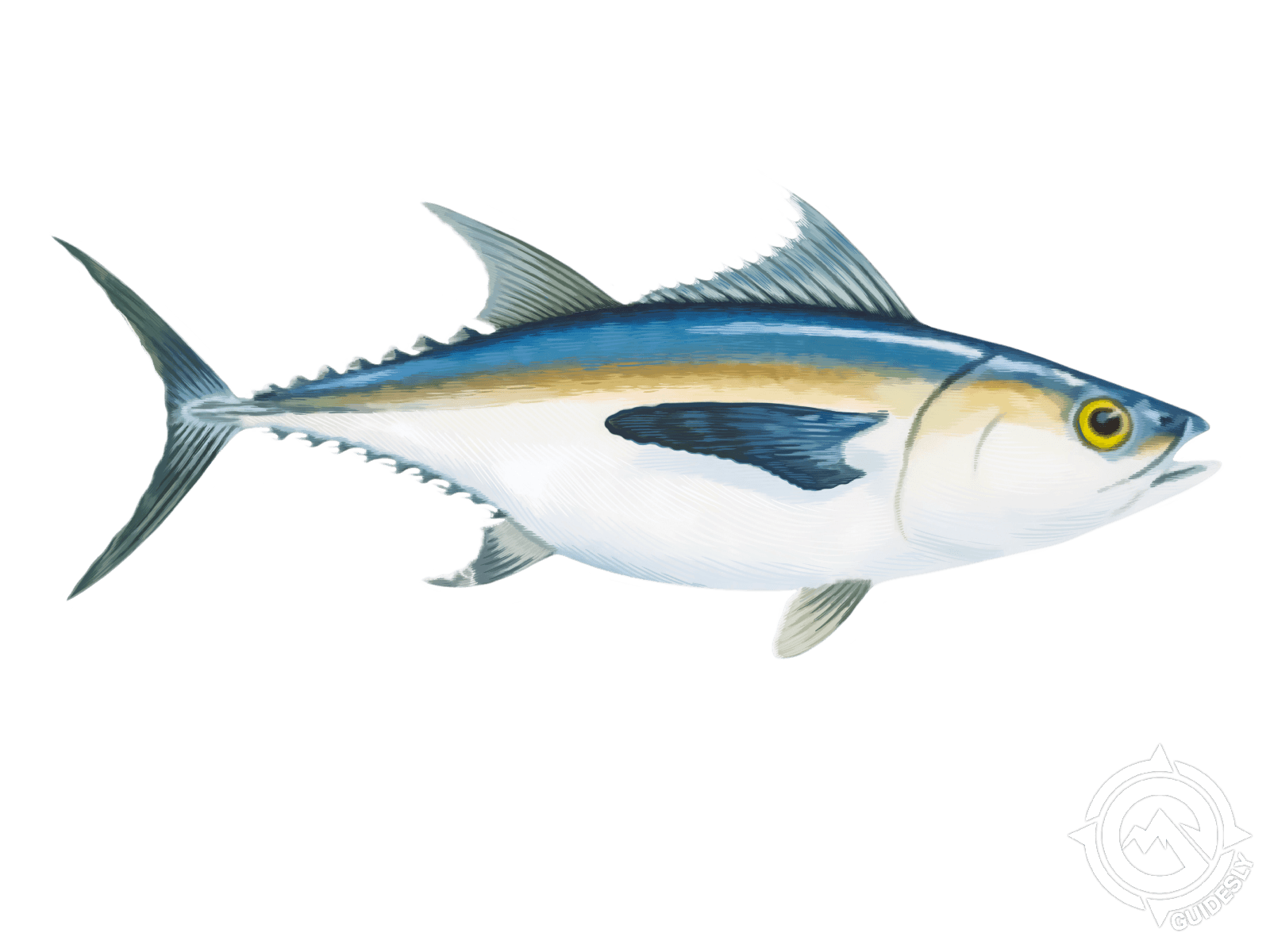
Blackfin Tuna Overview
The Blackfin Tuna (Thunnus atlanticus) is a remarkable member of the Scombridae family within the order Perciformes. Also known as the Deep-Bodied Tunny, Albacore, or Bonite Nore in French, this species represents the smallest tuna in the Thunnus genus, yet punches well above its weight in terms of fighting spirit and culinary value. What makes the Blackfin Tuna truly special is its stunning coloration—a sleek black body adorned with faded yellow finlets, a striking golden lateral band that unfortunately fades upon death, and distinctive bronze reflections on its dorsal finlets. Found predominantly in warm offshore waters from the Gulf of Mexico to the Caribbean Sea and extending to Martha's Vineyard in Massachusetts, this highly migratory species has become a cornerstone of both recreational and commercial fisheries, particularly around the Florida Keys where anglers flock year-round to test their skills against these fierce fighters.
Blackfin Tuna Habitat and Distribution
Blackfin Tuna thrive in warm oceanic waters where temperatures consistently exceed 68°F, making them seasonal visitors to more temperate regions during summer months. The species concentrates heavily in the Gulf of Mexico, Caribbean Sea, and along the continental shelves where they hunt in large schools. In the United States, their range is somewhat limited, with the most reliable populations found along Florida's coast, particularly in the Florida Keys during autumn, winter, and spring when water conditions prove most favorable. These fish typically inhabit areas near the continental shelf break, preferring oceanic waters close enough to the coastline to support their migratory feeding patterns. The migration habits of Blackfin Tuna make them predictable quarries for experienced anglers who understand seasonal movements and water temperature preferences.
Blackfin Tuna Size and Weight
While individual Blackfin Tuna can reach impressive sizes for their species, they typically grow to lengths between 7 and 43 inches, with weights generally ranging from 2 to 20 pounds. However, larger specimens have been documented reaching up to 39 inches and weighing as much as 46 pounds, making trophy catches relatively attainable for dedicated anglers. What's particularly interesting about this species is its rapid growth rate—a five-year-old Blackfin Tuna is already considered old, underscoring the species' accelerated life cycle compared to larger tuna varieties. The average fish encountered by recreational anglers typically falls in the 15 to 30-pound range, offering manageable yet exciting battles on medium to light tackle. This size range makes them particularly appealing to visiting anglers who want the thrill of tuna fishing without requiring heavy-duty offshore equipment.
Blackfin Tuna Diet and Behavior
Blackfin Tuna are aggressive predators with remarkably diverse diets that reflect their adaptability to offshore environments. These fish feast primarily on small fish and squid, but they also readily consume larvae of decapods, stomatopods, and amphipods, along with crustaceans such as crabs and shrimp. Their cannibalistic tendencies suggest a fierce competitive nature within schools, and they themselves fall prey to larger species including Skipjack Tuna, Blue Marlin, and Dolphinfish. What's particularly noteworthy is their exceptional eyesight, which means they can spot both prey and potential threats from considerable distances. This keen vision directly influences fishing techniques and tackle choices—anglers must scale down leaders and hooks to avoid detection. Behaviorally, Blackfin Tuna are highly social fish that create massive schools, often mixed with Skipjack Tuna, and maintain constant movement in search of food. Their migratory patterns follow seasonal water temperature changes, with fish moving toward warmer equatorial waters during winter months and pushing northward as summer approaches.
Blackfin Tuna Spawning and Seasonal Activity
The seasonal activity patterns of Blackfin Tuna create distinct windows of opportunity for anglers throughout their range. These fish reach peak abundance in the Florida Keys during autumn, winter, and spring months when water temperatures stabilize in their preferred range. Summer brings migration to more temperate waters, with specimens appearing as far north as Martha's Vineyard in Massachusetts during the warmest months. While specific spawning details for Blackfin Tuna remain less documented than for larger tuna species, their rapid growth and short lifespan suggest concentrated reproductive periods, likely aligned with their migration cycles. Understanding these seasonal shifts proves crucial for planning fishing expeditions—spring and fall offer particularly productive windows when concentrations peak before seasonal migrations disperse populations. The migratory nature of the species also means that local populations fluctuate predictably throughout the year, with summer months offering opportunities in northern waters and winter months concentrating fish in southern reaches.
Blackfin Tuna Techniques for Observation and Capture
Trolling and Drift Fishing: Among the most effective methods for targeting Blackfin Tuna, trolling with small lures or feathered jigs can produce explosive strikes. Position your vessel along the continental shelf break where baitfish congregate, maintaining speeds between 6 and 10 knots. Drift fishing in areas with visible baitfish activity also proves highly productive, allowing you to cover water while presenting natural prey patterns. Around the Florida Keys and offshore banks, morning hours typically produce the fastest action, with fish responding aggressively during low-light periods.
Vertical Jigging and Chunking: According to seasoned offshore anglers, vertical jigging represents perhaps the most effective technique for consistently catching Blackfin Tuna, particularly when fishing deep structure or continental shelf edges. Drop metal jigs (3 to 6 ounces) to appropriate depths and work them with sharp, aggressive strokes. Chunking—distributing cut baitfish to establish a slick—complements jigging beautifully by attracting fish to your location. Use live pilchards as chum to draw feeding fish closer to your boat, then entice them with appropriately sized baits or jigs. Position your vessel upcurrent to allow the scent trail to flow naturally toward feeding zones.
Light Tackle Presentation with Live Bait: Deploying live baitfish on appropriately scaled tackle creates exciting opportunities for active Blackfin Tuna. Use 5/0 to 6/0 circle hooks paired with #30 fluorocarbon leaders to minimize visibility to these sharp-eyed predators. Live mullet, mackerel, or pilchards presented on spinning or conventional light tackle often produce strikes from opportunistic fish. Cast near visible baitfish schools or structure, allowing live baits to work naturally while maintaining light contact with your line.
Blackfin Tuna Culinary and Utilization Notes
The Blackfin Tuna has earned an excellent reputation in culinary circles, with flesh prized for its superior taste and firm texture. Commercially, these fish are typically marketed fresh immediately after harvest, then processed and canned for broader distribution. The meat ranges from pink to deep red depending on diet and individual fish condition, and it remains excellent for grilling, searing, and poke preparations. Nutritionally, Blackfin Tuna provides abundant protein, omega-3 fatty acids, and essential minerals, making it a healthy protein choice. Unlike some larger tuna species, Blackfin Tuna have not appeared on Greenpeace International's seafood red list, making them a more sustainable seafood choice compared to certain other commercial tuna varieties. For recreational anglers, the opportunity to catch and consume fresh Blackfin Tuna represents a genuine treat—few culinary experiences rival freshly caught tuna prepared within hours of landing.
Blackfin Tuna Frequently Asked Questions
Q: What is the best bait and tackle setup for catching Blackfin Tuna?
A: Circle hooks in 5/0 to 6/0 sizes paired with #30 fluorocarbon leaders prove optimal, as Blackfin Tuna possess exceptional eyesight and can detect heavier, more visible gear. Live pilchards, mullet, or mackerel work wonderfully as live baits, while cut mackerel or bonito effectively chunks for chum lines. Light to medium conventional or spinning reels handle these fish well, with 20 to 30-pound braid providing adequate power and sensitivity.
Q: Where can I find Blackfin Tuna near the Florida Keys?
A: The continental shelf breaks and offshore banks surrounding the Florida Keys hold consistent populations, particularly during autumn, winter, and spring. Areas like the Tortugas, the Marquesas, and offshore structure between Key West and Dry Tortugas produce reliable action. Local charter captains can guide you to current hotspots, as conditions and fish movements shift seasonally and based on water temperature and baitfish availability.
Q: When is the best time to catch Blackfin Tuna?
A: Peak seasons occur during autumn, winter, and spring in southern waters like the Florida Keys, while summer months extend opportunities northward to Martha's Vineyard in Massachusetts. Within any given day, early morning and late afternoon hours typically produce the most aggressive feeding activity, particularly during low-light periods when these visual predators hunt most effectively.
Q: Is Blackfin Tuna good to eat?
A: Absolutely—Blackfin Tuna ranks among the finest eating tuna species available to recreational anglers. The flesh is firm, flavorful, and superbly tasty whether grilled fresh, used for sashimi, or prepared in poke preparations. The excellent odds for food quality make this species a worthwhile target not just for the fight, but for the culinary reward upon landing.
Q: How do I locate Blackfin Tuna without a fish finder?
A: Look for visible baitfish schools, diving seabirds, and surface activity along continental shelf edges and structure. Blackfin Tuna often feed aggressively on baitfish at the surface, creating visible splashes and commotion. Troll or drift through areas where baitfish appear concentrated, watching for predatory activity. Early morning light provides the best visibility for spotting feeding fish.
Q: What parasites affect Blackfin Tuna and does this impact eating quality?
A: While Blackfin Tuna can host copepods, gillworms, tapeworms, and flukes like many marine fish, proper filleting and cooking techniques eliminate parasitic concerns. Thorough cleaning, removing viscera and gills immediately after capture, and cooking fish to appropriate temperatures ensures food safety. Commercially processed fish undergo additional inspection and processing standards that further reduce any parasitic risk.
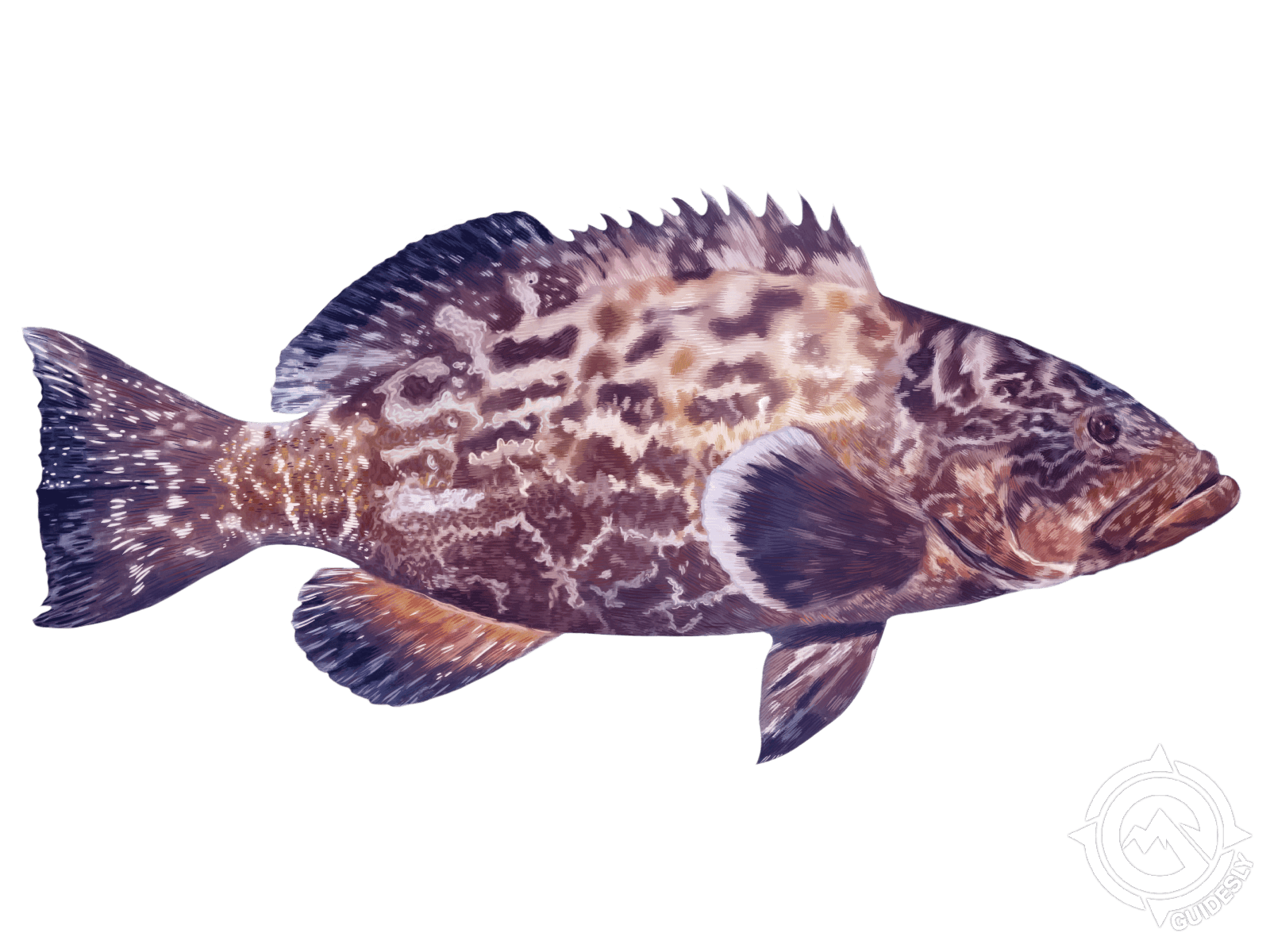
Black Grouper Overview
The Black Grouper (Mycteroperca bonaci), a member of the Serranidae family within the order Perciformes, is one of the most prized saltwater species in the western Atlantic. Known locally as black rockfish or marbled rockfish, this robust predator is instantly recognizable by its distinctive olive or gray coloration accented with dark rectangular blotches and brassy spots scattered across its body, head, and fins. What makes the Black Grouper truly fascinating to anglers and marine enthusiasts is its unique reproductive strategy—all individuals are born female, with some transitioning to males as they mature. Whether you're fishing the Gulf of Mexico or exploring Caribbean reefs, encountering a Black Grouper represents a thrilling moment in any angler's journey.
Black Grouper Habitat and Distribution
Black Groupers are endemic to the western Atlantic, inhabiting waters that stretch from Massachusetts southward to southern Brazil, with particular concentrations in the Gulf of Mexico, the Florida Keys, and throughout the Caribbean Sea. These fish show a strong affinity for structure—offshore wrecks, rocky ledges, coral reefs, and other submerged features provide the ideal hunting grounds where they stake out positions near the bottom. What's remarkable about their depth preferences is their flexibility; during colder months, they may venture into shallow waters as shallow as 30 feet, but when spring and summer arrive, they'll descend to depths exceeding 300 feet in search of cooler water and abundant prey. Around Florida's Gulf Coast and the Caribbean, popular hotspots include wreck sites, artificial reefs, and natural limestone formations where these ambush predators wait patiently for passing meals.
Black Grouper Size and Weight
While the average Black Grouper typically reaches lengths between 39 and 52 inches and weighs between 5 and 20 pounds, these dimensions represent a solid catch that any angler would be proud to land. Exceptional specimens do occur—the all-time record holder, caught by Floridian angler Alex Newman in the Gulf of Mexico during a 2015 fishing tournament, measured an impressive five feet in length and weighed nearly 125 pounds. However, such trophy-sized fish are genuinely rare in modern fisheries. The species' girth and muscular build, while making for excellent eating, also mean they sacrifice speed for raw strength—a fact that becomes abundantly clear when you're fighting one on the line.
Black Grouper Diet and Behavior
Black Groupers are opportunistic ambush predators with a remarkably non-selective palate. Juveniles feed primarily on small crustaceans drifting in the water column, but as they mature into adults, their diet expands to include small reef fishes such as snappers and herrings, as well as small squid. Rather than using their teeth to tear flesh, these fish employ a sophisticated hunting strategy—they create powerful suction with their large mouths and gill systems to inhale their prey whole. This feeding technique means that once a Black Grouper commits to striking your bait, there's no delicate nibbling; it's an all-or-nothing attack. Outside of spawning season, they are predominantly solitary hunters, spending their time patrolling reefs and wrecks. Interestingly, they frequently position themselves near other fish species' spawning aggregations, capitalizing on the easy meals that congregating spawners provide. Black Groupers can live remarkably long lives—over 30 years in many cases, with some individuals reaching 50 years or more—allowing them to grow into the truly massive specimens that have become legendary among Gulf Coast anglers.
Black Grouper Spawning and Seasonal Activity
The spawning season for Black Groupers typically begins in November and extends through May, coinciding with cooling water temperatures. During this period, solitary fish congregate, and both males and females release sperm and eggs simultaneously into the water column. The fertilized eggs drift passively with ocean currents until they hatch, and the resulting larvae continue their planktonic existence, feeding on microscopic organisms. As water temperatures shift seasonally, Black Groupers also adjust their depth preferences—shallow-water hunting grounds in winter give way to deeper-water pursuits during warmer months. Understanding these seasonal patterns is crucial for anglers seeking consistent success, as fish location and activity levels fluctuate predictably throughout the year.
Black Grouper Techniques for Observation and Capture
Heavy-Duty Bottom Fishing: To successfully tangle with a Black Grouper, you'll need heavy-duty equipment capable of withstanding the intense power and tenacity these fish bring to a fight. Equip yourself with a reel featuring at least 20 pounds of drag capacity, paired with 80-pound braided mainline and a 100-pound leader. Present your bait—live or dead, they're not fussy—directly on the bottom where these fish hunt. Whether it's mullet, mackerel, or squid, Black Groupers will aggressively strike anything resembling food in their immediate vicinity. The key to success is immediate hook-set response; the moment you feel that signature tug, begin reeling with purpose to prevent the fish from returning to rocky cover where it could snap your line.
Wreck and Reef Positioning: Target known structures such as artificial reefs, shipwrecks, and natural ledge systems in depths ranging from 30 feet in winter to 300+ feet during warmer months. Use a GPS or electronic charts to mark productive spots, and position your boat uptide of the structure to allow your bait to drift naturally into the strike zone. Around the Florida Gulf Coast and Caribbean islands, December through March typically offers peak conditions as fish move to shallower waters.
Live Bait Presentations: Deploy live baitfish suspended just above the bottom or allow them to work naturally around reef structure. Black Groupers respond vigorously to fleeing, stressed baitfish—they're ambush predators hardwired to strike wounded prey. Keep your line relatively tight and stay alert; remember that these fish don't nibble—they inhale, and you must set the hook immediately to avoid losing your catch.
Black Grouper Culinary and Nutritional Notes
Black Grouper meat is considered excellent eating, with commercial and recreational anglers alike prizing it for both its flavor and texture. The flesh exhibits a mild, delicate flavor profile paired with a firm yet tender texture that holds up beautifully to various cooking methods—whether served whole, filleted, or cut into steaks. Nutritionally, Black Grouper is particularly noteworthy, delivering substantial amounts of vitamin B6, vitamin B12, phosphorus, potassium, and selenium. These nutrients contribute to improved energy metabolism, bone health, and immune function. The meat's mild character makes it an ideal protein for diners who may not prefer assertive fish flavors, broadening its appeal in both home kitchens and restaurants. From a sustainability perspective, it's advisable to check local regulations and seasonal guidelines, as some regions implement fishing restrictions to protect breeding populations and ensure long-term species viability.
Black Grouper Frequently Asked Questions
Q: What is the best bait for catching Black Grouper?
A: Black Groupers are remarkably unselective feeders and will strike both live and dead baitfish with equal enthusiasm. Mullet, mackerel, herring, and squid all produce excellent results. The critical factor isn't the bait type but rather its presentation on or near the bottom where these ambush predators hunt. Live baitfish exhibiting natural distress behavior often trigger the most aggressive strikes.
Q: Where can I find Black Grouper in the Gulf of Mexico and Caribbean?
A: Black Groupers congregate around structure—shipwrecks, artificial reefs, natural limestone ledges, and rocky outcroppings. The Gulf of Mexico's numerous wreck sites, particularly off the Florida coast, attract significant populations. In winter months, fish move into shallower coastal waters (30-100 feet), while summer fishing often requires venturing to depths of 200-300+ feet. The Caribbean's extensive reef systems provide year-round opportunity.
Q: How do I know when a Black Grouper is striking my bait?
A: Unlike many fish species that produce subtle takes, Black Groupers deliver unmistakable strikes—you'll feel a solid tug or sudden weight increase as they inhale your bait whole. There's minimal opportunity for hesitation; upon detecting this strike, immediately engage your reel and apply steady, powerful upward pressure to begin extracting the fish before it retreats to rocky cover.
Q: When is the best time to catch Black Grouper?
A: November through May represents prime Black Grouper season, coinciding with their spawning period and subsequent shallow-water migration as temperatures drop. December through March typically offers peak accessibility, with fish concentrated in shallower, more easily accessible waters. Summer fishing is still productive but requires venturing to greater depths and often covers more ground to locate actively feeding populations.
Q: Is Black Grouper meat good to eat, and what does it taste like?
A: Black Grouper is excellent table fare with mild, delicate flavor and a firm yet tender texture. It's versatile enough to suit various preparations—grilling, baking, steaming, or frying all work beautifully. The meat's light flavor appeals to those who prefer less assertive fish, while its nutrient density, including vitamins B6 and B12 plus valuable minerals, makes it a nutritious protein choice.
Q: What should I do if a shark or moray eel tries to steal my hooked Black Grouper?
A: Reef predators including sharks and moray eels frequently attack hooked Black Groupers before they can be extracted. Your best defense is a heavy-duty setup and unwavering determination—apply maximum pressure to extract your catch quickly before competitors arrive. Some anglers employ heavy metal gaffs or specialized shark-handling techniques, though prevention through rapid extraction remains the most effective strategy. Always be mentally prepared for aggressive competition from fellow apex predators in the reef ecosystem.